Batteries · 4 min read
Power tool batteries: volts, Ah and Wh explained
How many Ah do you really need? What does an 18 V or 21 V battery mean? A clear guide to choosing and looking after the lithium-ion batteries of your tools.
Viemylu editorial teamPublished on
With a cordless tool you are really buying a motor and a store of energy. The store is the battery, and its spec sheet is full of labels: 12 V, 21 V, 1.5 Ah, 5 Ah. Understanding them helps with two things: choosing the right one for the job, and not being fooled by a big number put up front.
Volts, Ah and Wh in three lines
- Volts (V) measure the electrical “pressure”: they matter for the power the tool can deliver.
- Amp-hours (Ah) measure capacity: how much current the battery can supply for an hour.
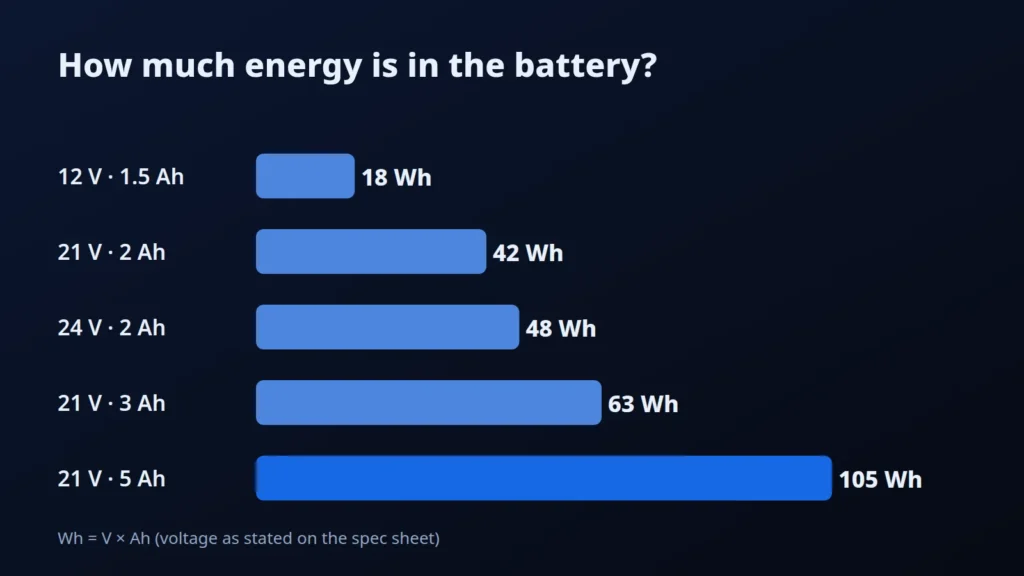
- Watt-hours (Wh) measure energy, that is, how much work you can do. You get them by multiplying: Wh = V × Ah.
The most useful figure for comparing two batteries is therefore Wh, because it combines voltage and capacity.
Why 18 V and 21 V are often the same battery
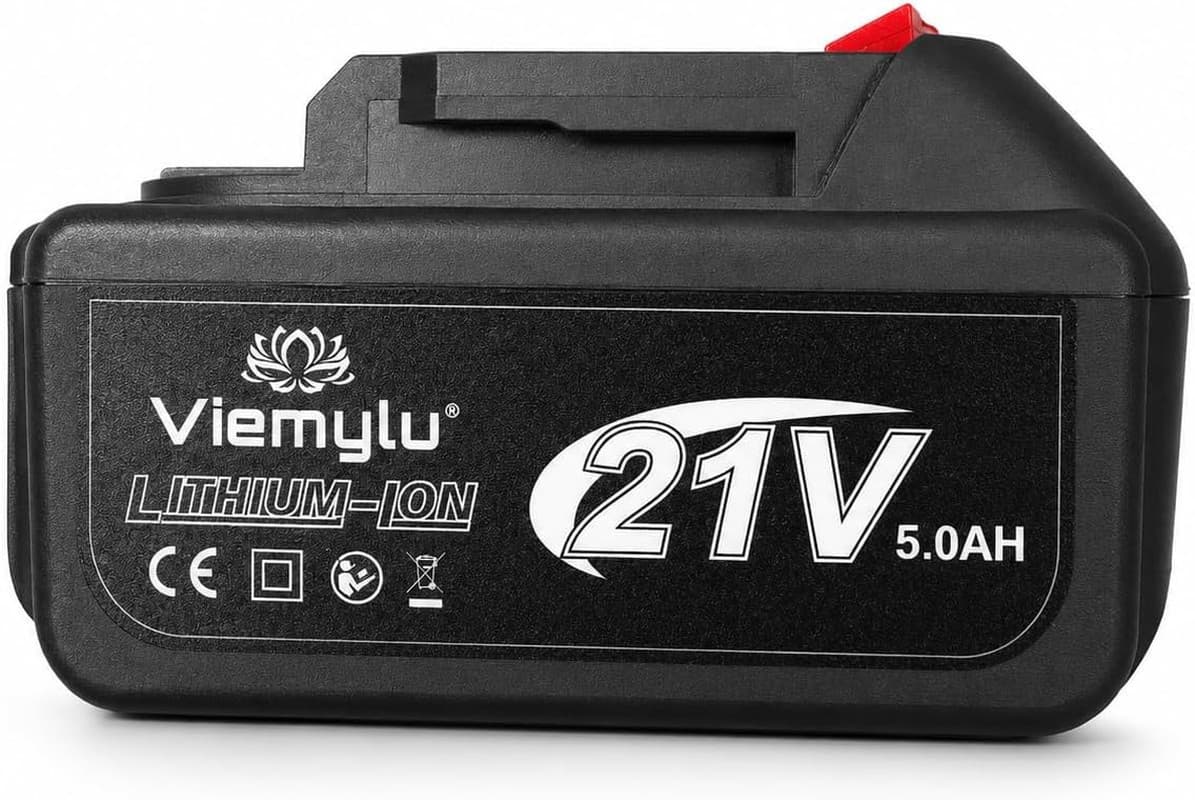
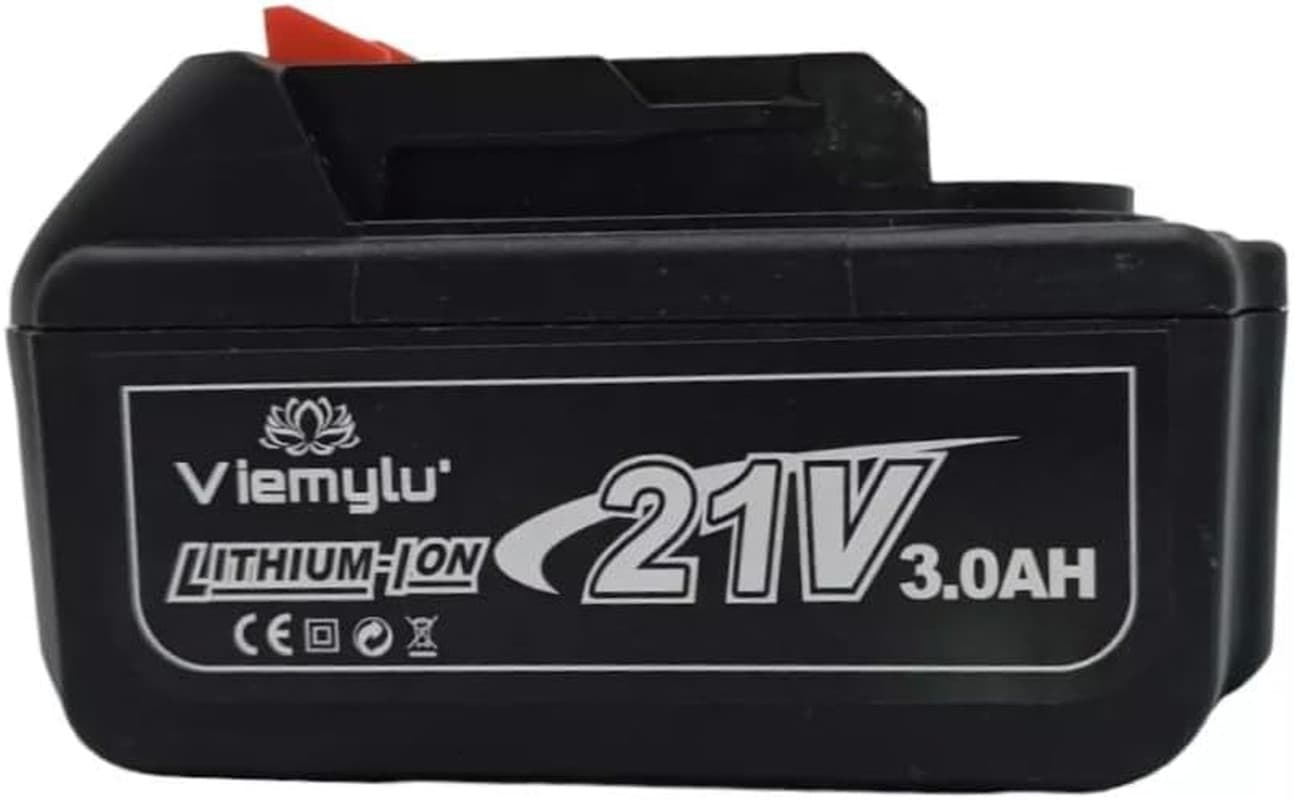
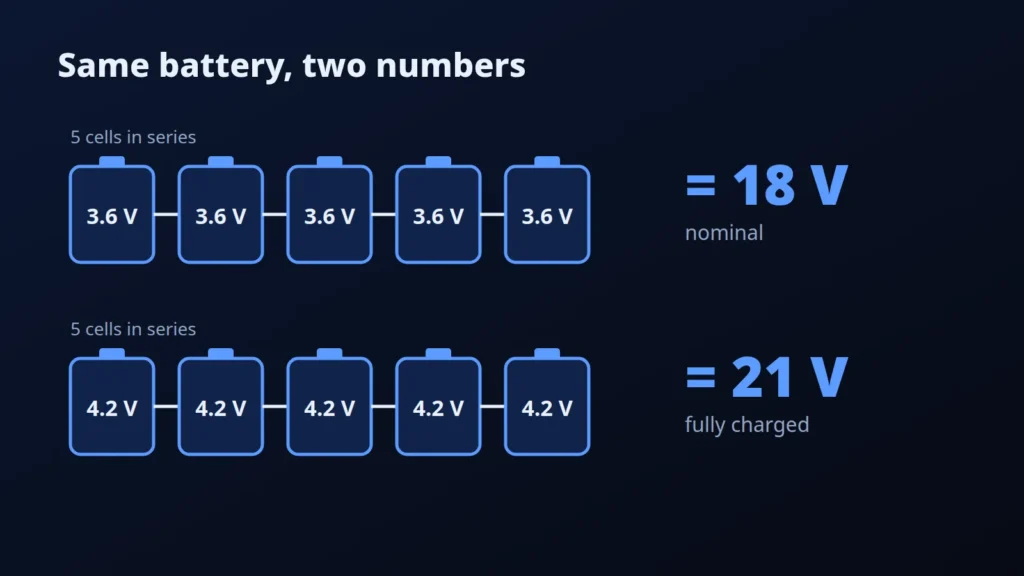
A lithium-ion cell has a nominal voltage of about 3.6 V and reaches 4.2 V when fully charged. A pack of five cells in series therefore gives 18 V nominal and 21 V fully charged. It is the same battery presented with two different numbers: tool makers call it “18 V”, many sellers “21 V”.
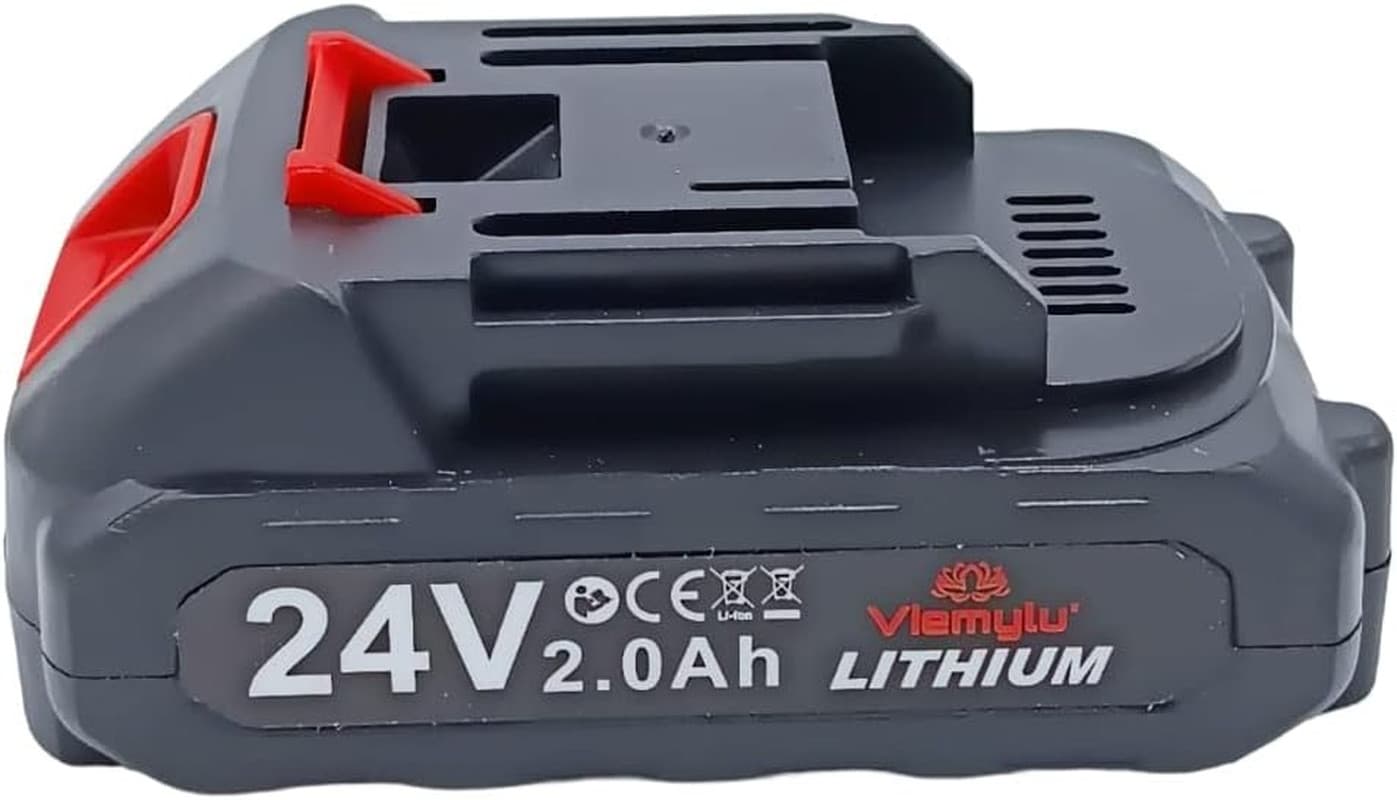
Something similar happens with six-cell packs, labelled “24 V” or “25 V”: the stated value is usually the fully charged one. So when you compare two tools, do not rely on volts alone: look at Ah and Wh too.
How many Ah do you need
It depends on the tool and how much you use it.
| Use | Indicative capacity |
|---|---|
| Assembly, driving screws, small jobs | 1.5 – 2 Ah |
| Regular home use, drill, jigsaw | 2 – 4 Ah |
| Long or power-hungry jobs (grinder, mini chainsaw, blower) | 4 – 5 Ah or more |
More Ah means more runtime, but also more weight and a longer charging time. If you use the tool overhead, for example when pruning, a heavy battery tires your arm: choose the capacity you need, not the highest.
Capacity and power are not the same thing
Two 5 Ah batteries can behave very differently. The difference lies in the cells and their ability to deliver current: a hungry tool such as a grinder or a mini chainsaw needs cells that can supply high current without overheating. A cheap battery with many cells in parallel can have lots of Ah and still struggle under heavy loads. If the tool often cuts out on protection or the battery gets very hot, this is usually the cause.
Compatibility between brands: mind the details
Batteries exist with a connector compatible with the most common brands. Before buying check three things: the connector (the mechanical shape), the voltage and that the tool is listed as compatible. It is not enough that the battery “fits”: the electrical match and communication with the tool’s electronics matter. Using batteries not intended by the maker can void the tool’s warranty.
How many batteries you need
The practical rule is two: one working, one charging. If you work long hours, three. That is why many tools are sold with two batteries and a charger.
Care and safety
Lithium-ion batteries are safe if treated well. There are few rules:
- Use the charger supplied (or one specified by the maker), in a dry, ventilated place away from flammable materials.
- Do not charge it if it is very hot or frozen: wait until it returns to room temperature.
- Do not use it if it is deformed, swollen, dented or wet. Stop using it and dispose of it.
- Do not leave it in a car in the sun or in very hot places.
- For long periods of inactivity, store it partly charged (roughly half), in a cool, dry place, and top it up now and then.
- Never throw batteries in general waste: put them in battery collection bins or take them to a collection point, or back to the shop when you buy a new one.
In short
- Compare batteries by Wh, not just volts.
- 18 V and 21 V are often the same pack: look at the cells and the manufacturer.
- Choose Ah according to use and the weight you are willing to carry.
- Check connector and compatibility.
- Treat batteries well and they will last longer.
For a drill also see how to choose a cordless drill driver. Batteries and tools are in the Batteries category; below are the ones mentioned in this guide.