DIY · 4 min read
How to choose a cordless drill driver
Voltage, torque, chuck and batteries: what really matters before buying a cordless drill driver, without paying for features you will never use.
Viemylu editorial teamPublished on

You walk into a shop, or open a product page, and find dozens of nearly identical cordless drills: 12 V, 21 V, 24 V, with two batteries, with a case, “brushless”, “hammer”. The price barely changes; the labels change a lot. The good news is that four questions are enough to choose well, and none of them needs an engineering degree.
First of all: what do you need it for?
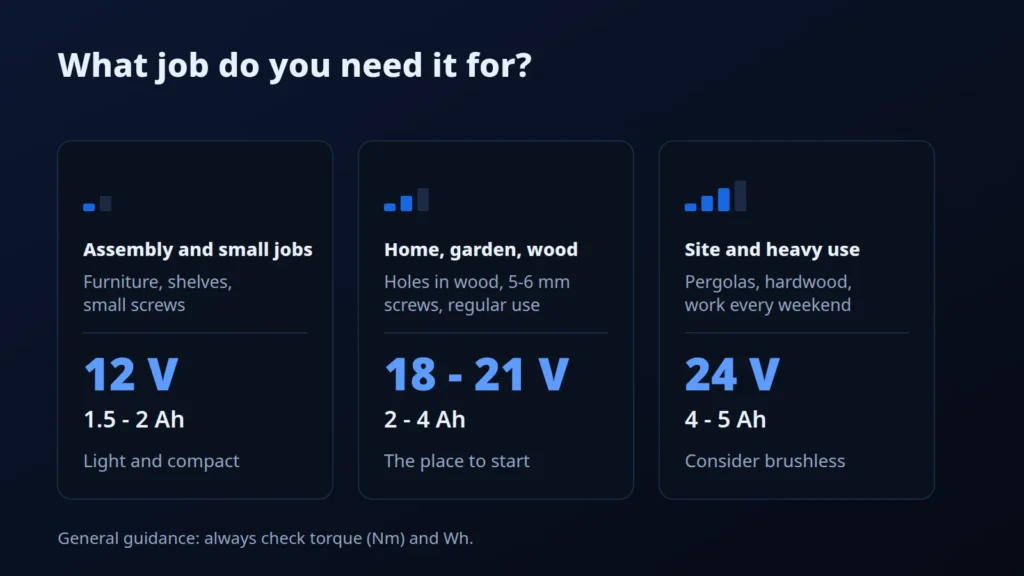
The right drill driver depends on the toughest job you will do regularly, not on the one you will do once in a while. Assembling furniture, hanging shelves and drilling a few holes in wood calls for a light tool. Building a pergola, driving long screws into hardwood or drilling every weekend calls for more power, and above all more battery.
Drill driver, hammer drill or impact driver?
These are three different tools, often mixed up in product listings:
- Drill driver: drills and drives screws. The right choice for almost every household job. It has a chuck that opens and closes and a clutch collar.
- Hammer drill: it also has a mechanism that “hammers” while turning. It is for light masonry and bricks, but not for reinforced concrete, which needs a rotary hammer (SDS).
- Impact driver: it does not drill, it drives. It has a hex socket for bits and delivers rotary impacts that tighten bolts and very long screws without tiring your wrist. Great for building sites and workshops, less suited to precision work.
If you can only buy one, start with the drill driver.
Voltage: 12 V, 18-21 V or 24 V
Voltage gives an idea of the “strength” available and, usually, of the size of the tool.
- 12 V: compact and light, ideal for furniture assembly and overhead work. They tire sooner with long screws and large holes.
- 18-21 V: the most common range. It copes well with holes in wood, 5-6 mm screws and long sessions. This is where we suggest you start.
- 24 V and above: useful when performance matters more than weight.
One detail to watch: 18 V and 21 V are often the same battery. The higher value is at full charge, the lower is the nominal one. We explain it in the battery guide: to compare two tools, look at Wh and torque, not only volts.
Torque, clutch and speed
Torque (in Nm) is the turning force. The higher it is, the better the drill pushes a big screw into hardwood. But that alone is not enough: if it is too high without control, you strip screws and damage delicate materials. That is why the clutch matters, the numbered collar behind the chuck: at low numbers the drill “clicks” when it reaches that torque, sparing the screw. For drilling you use the last position, the one with the drill symbol.
Look for two speeds too: low for driving and big holes, high for small, quick holes. A single-speed drill works, but it is less versatile.
Chuck: 10 or 13 mm
The chuck is the part that grips the bit. If it is a keyless single-sleeve type, you open and close it with one hand. Its size is the maximum diameter of a straight-shank bit: 10 mm is fine for the home, 13 mm for larger holes.
Batteries: how many and what capacity
The weak point of a cordless drill is almost always the battery. Check three things:
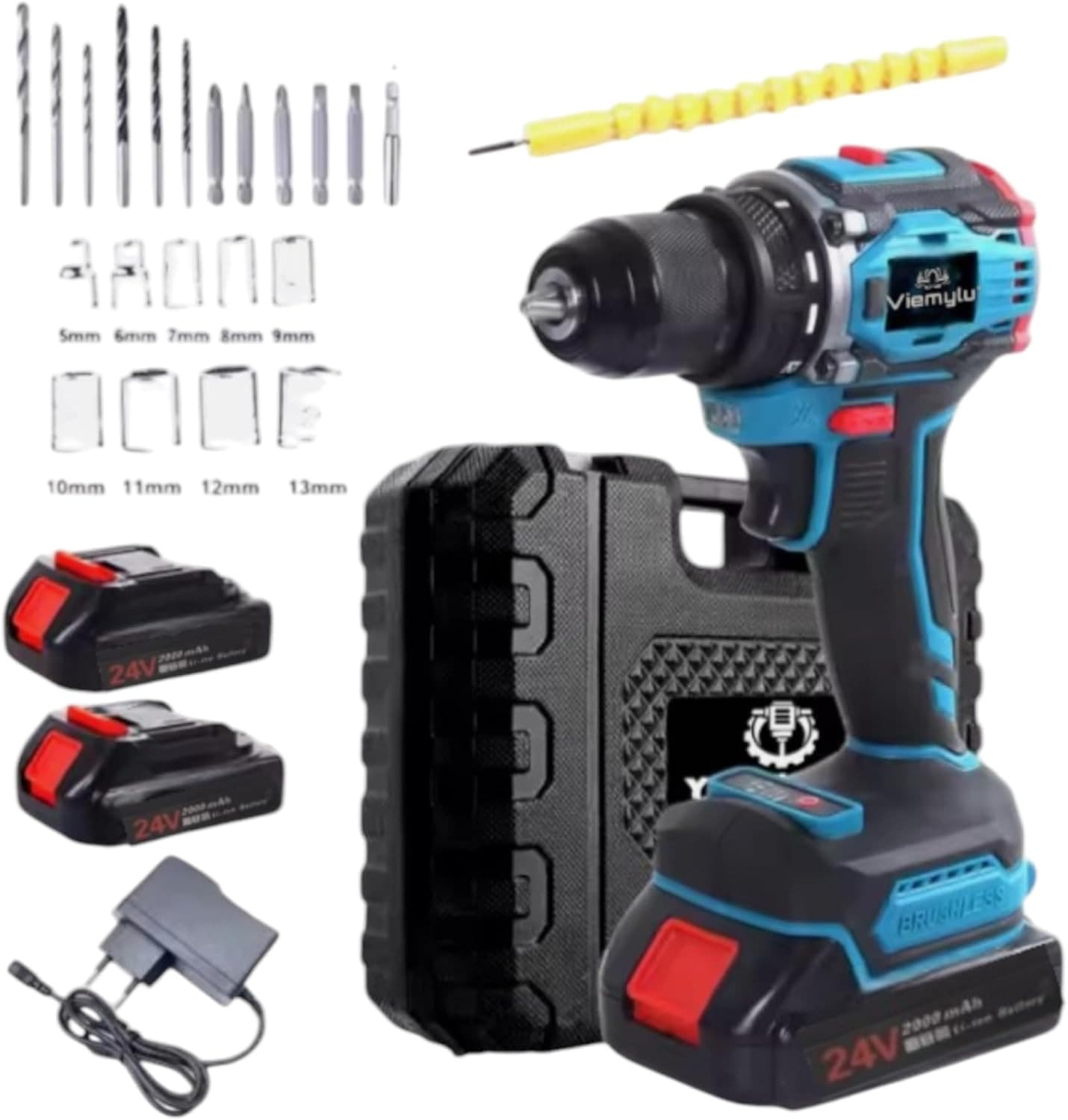
- Two batteries in the box: while one works, the other charges.
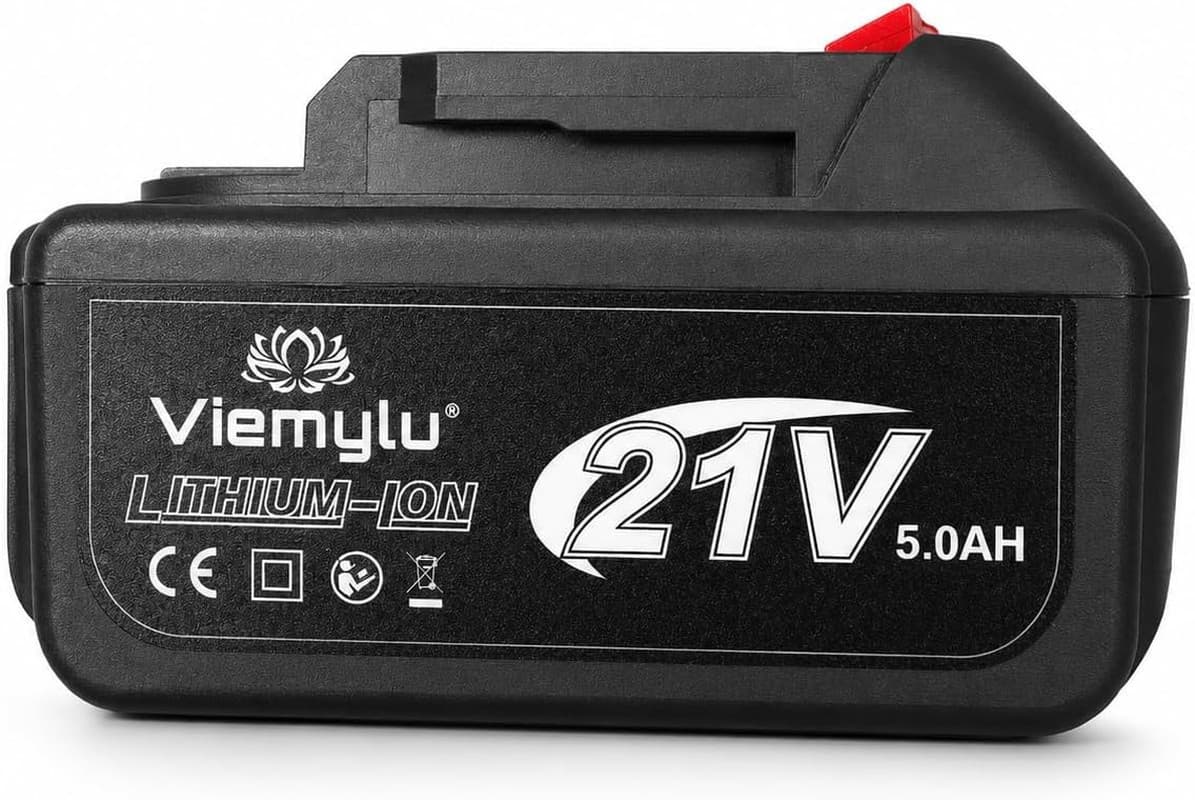
- Capacity in Ah: 2 Ah is enough for assembly; for long jobs 4-5 Ah is better (with more weight).
- Charger: the stated charging time and, if possible, a charge indicator.
Brushless: do you need it?
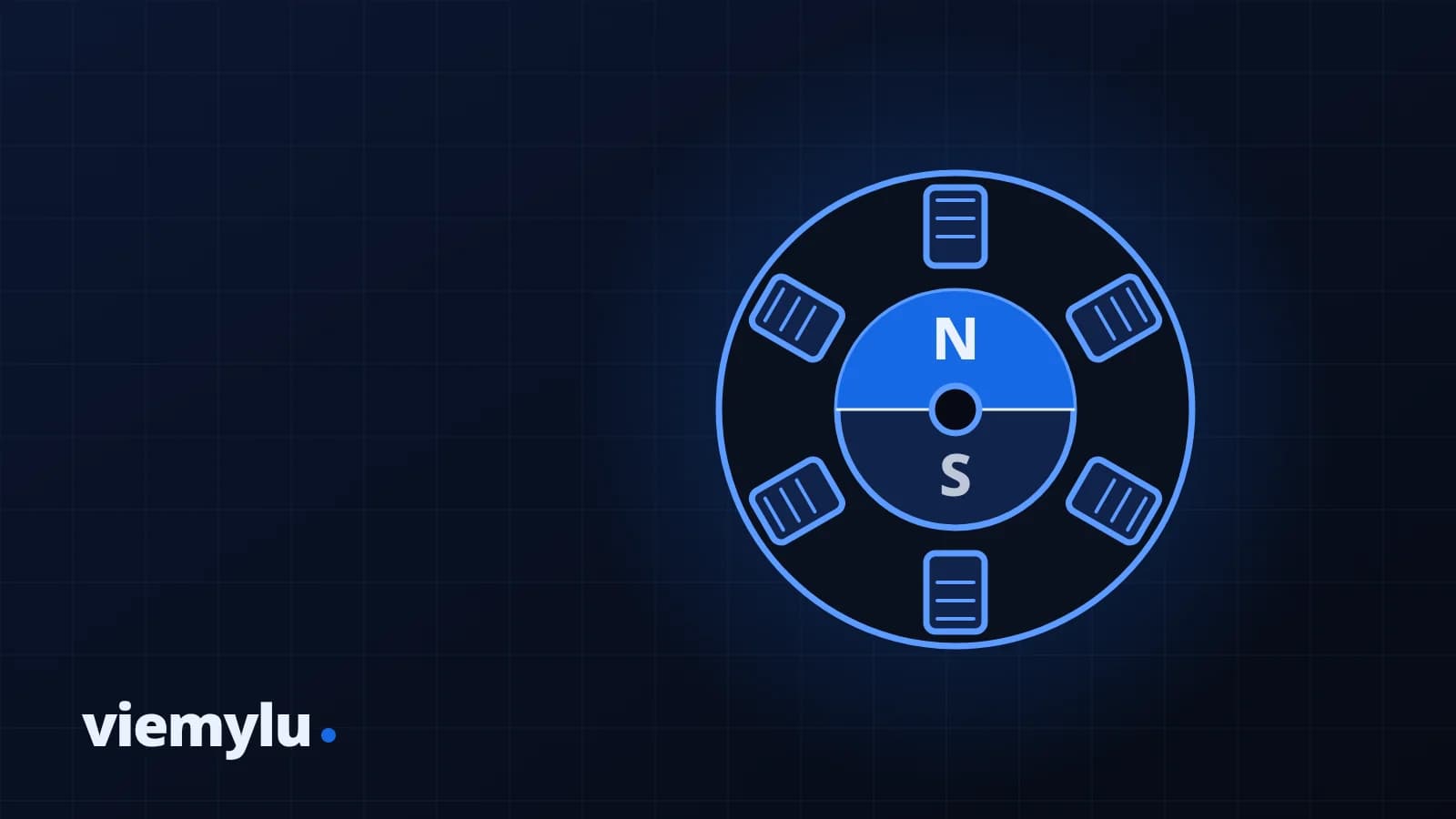
A brushless motor is more efficient, runs cooler and lasts longer, but costs a bit more. If you use the drill every week it is worth it; if you use it a few times a year, a conventional motor is perfectly fine. We cover it in the brushless vs brushed guide.
Small things that make a difference
- LED light next to the chuck: useful in cabinets, cellars and under stairs.
- Reverse with a handy selector.
- Motor brake: the chuck stops right away when you release the trigger.
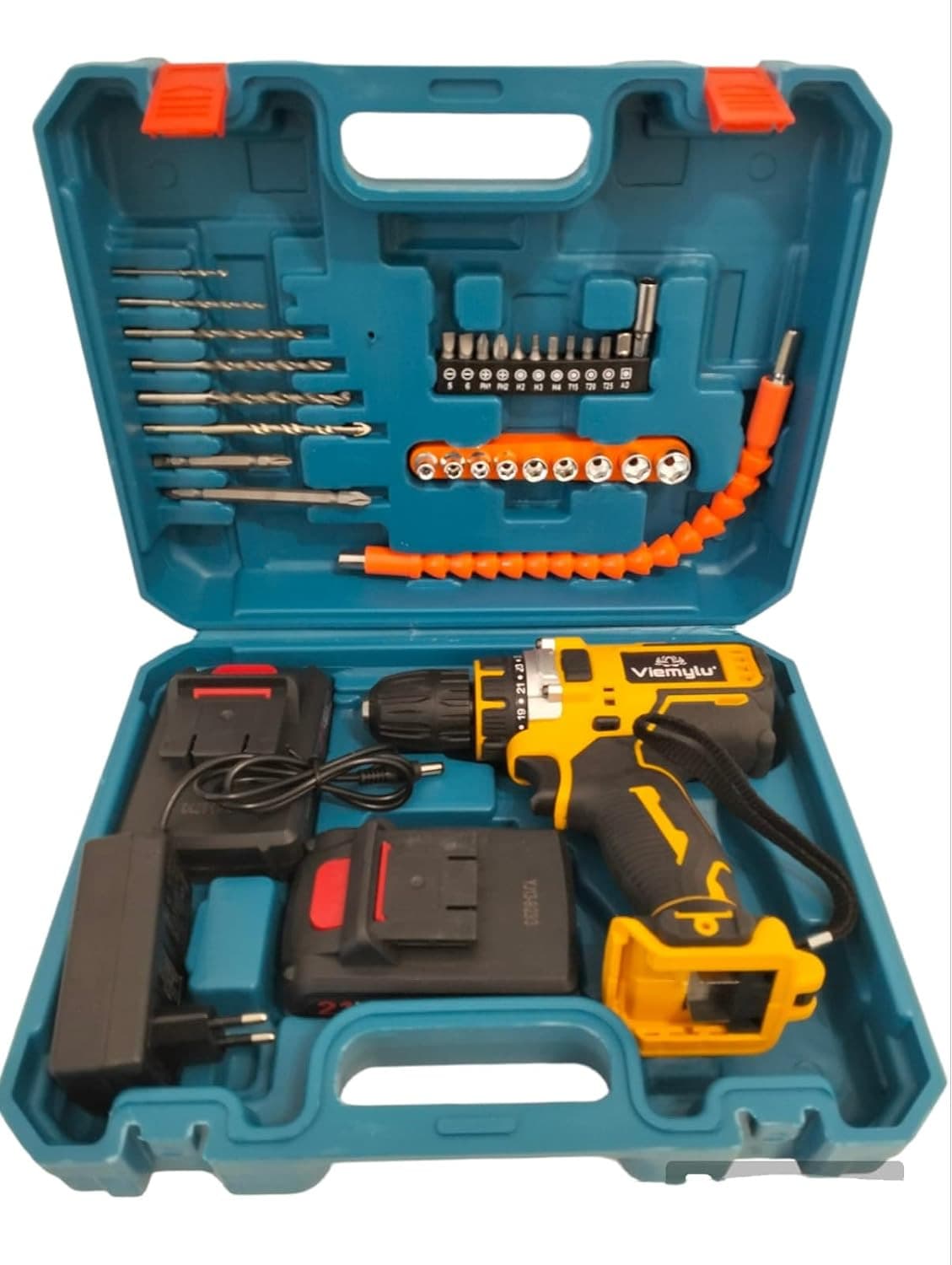
- Case and bits included: good to get started, but one good bit is worth a hundred poor ones.
What not to expect
A drill driver without hammer action does not drill concrete. Even with hammer action, reinforced concrete and load-bearing walls need a rotary hammer. Always wear safety glasses when drilling, and a dust mask if you work indoors with dusty materials.
In short
- For home and garden: 18-21 V, two speeds, 10 or 13 mm chuck, two batteries.
- For assembly and light jobs: a 12 V is fine too.
- For frequent use: consider brushless.
You will find our drill drivers in the DIY category; below are the ones mentioned in this guide.